Why Is My LG Refrigerator Not Cooling: 7 Common Causes and Easy Fixes
A refrigerator that suddenly stops cooling can quickly become a homeowner’s nightmare. Whether you’ve noticed spoiled groceries, warm beverages, or melting frozen foods, cooling issues demand immediate attention. If you’re searching for answers to why is my LG refrigerator not cooling, you’re certainly not alone. Cooling-related failures account for an estimated 30% to 40% of refrigerator service calls, making them one of the most common appliance problems homeowners face.
The frustration often begins when an LG refrigerator not cooling properly continues to run, creating confusion about what’s actually wrong. Some owners discover their LG refrigerator not cooling but running, while others find their LG refrigerator not cooling or freezing altogether. Beyond the inconvenience, these issues can lead to hundreds of dollars in food waste, higher utility bills, and potentially expensive repairs if left unresolved.
From years of appliance service experience across the industry, technicians consistently find that most cooling problems stem from a handful of common causes. The good news is that several of these issues can be identified early and, in some cases, fixed without extensive repairs. Understanding the root cause can help you make informed decisions and avoid unnecessary replacement costs.
Table of Contents
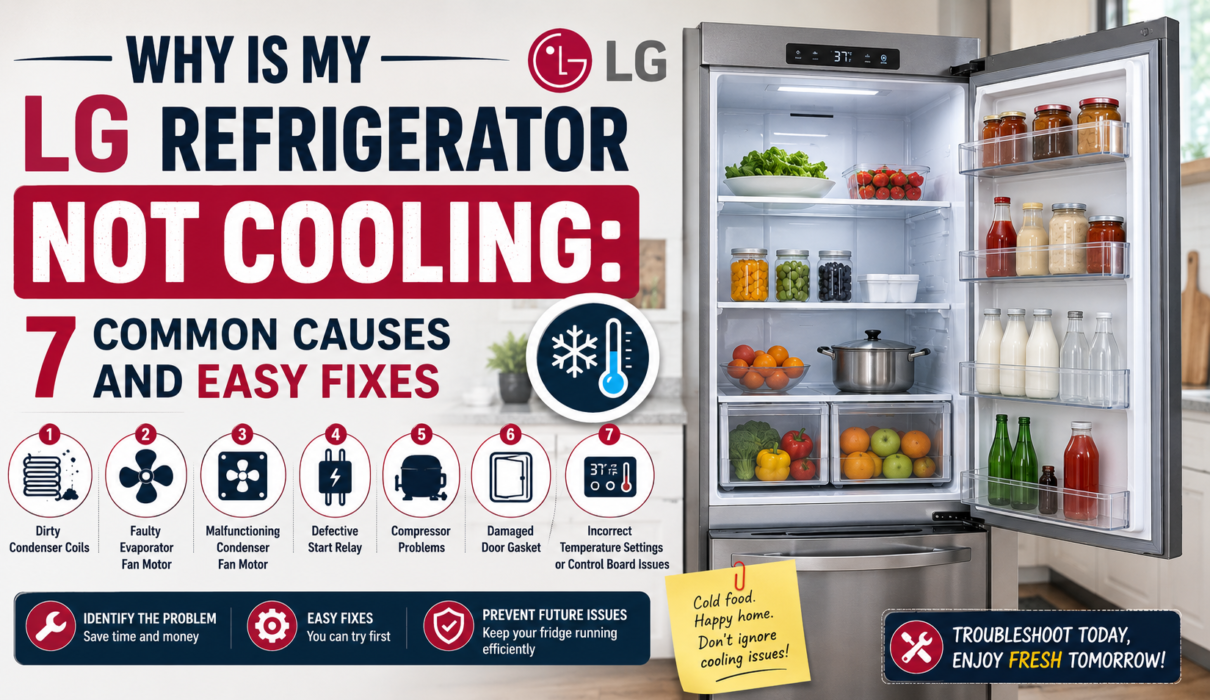
7 Common Causes of an LG Refrigerator Not Cooling
When homeowners report that their LG refrigerator will not cool, the issue often traces back to one of several critical components. Before assuming the worst, it’s important to understand the most common causes and how each one affects cooling performance.
1. Dirty Condenser Coils
Condenser coils play a vital role in removing heat from the refrigeration system. Over time, dust, pet hair, grease, and household debris accumulate on the coils, reducing their ability to release heat effectively.
As heat builds up, the compressor must work harder and longer to maintain cooling temperatures. This extra strain often results in poor performance and increased energy consumption.
Common symptoms include:
- Refrigerator feels warm despite running continuously
- Increased energy bills
- Compressor operating longer than normal
- Food spoiling prematurely
Fortunately, this is one of the easiest problems to fix. Cleaning condenser coils every six months can restore efficiency and prevent unnecessary wear.
Estimated Cost:
- DIY cleaning: $10–$25
- Professional cleaning service: $75–$150
2. Faulty Evaporator Fan Motor
If your LG refrigerator not cooling enough, the evaporator fan motor may be responsible.
The evaporator fan circulates cold air from the freezer compartment throughout the refrigerator. When it fails, cold air distribution becomes uneven, often leaving the freezer colder than the fresh food section.
Homeowners frequently notice:
- Refrigerator compartment warm while freezer remains cold
- Reduced airflow from interior vents
- Unusual squealing or grinding sounds
- Temperature fluctuations
A damaged fan motor generally requires replacement rather than repair.
Estimated Cost:
- Fan motor replacement: $50–$200
- Professional repair: $150–$350
Addressing fan issues quickly can prevent additional stress on the compressor and refrigeration system.
3. Malfunctioning Condenser Fan Motor
Another reason many homeowners ask, why my LG refrigerator is not cooling, involves the condenser fan motor.
This component helps cool both the condenser coils and compressor. If the fan stops operating correctly, excess heat builds up around the refrigeration system.
Signs of a failing condenser fan include:
- Excessively hot compressor area
- Loud rattling noises
- Refrigerator running constantly
- Reduced cooling efficiency
Ignoring this issue can accelerate compressor wear and lead to significantly higher repair costs.
Estimated Cost:
- Replacement fan motor: $60–$250
- Professional installation: $150–$400
4. Defective Start Relay
The start relay helps provide power to the compressor during startup. When it fails, the compressor may struggle to turn on or fail to operate altogether.
This issue often explains why some LG refrigerators not cooling appear to run normally while producing little or no cooling.
Symptoms include:
- Clicking noises from the rear of the refrigerator
- Compressor repeatedly attempting to start
- Warm refrigerator and freezer compartments
- Intermittent cooling performance
Because start relays are relatively inexpensive, this repair is often one of the most cost-effective solutions.
Estimated Cost:
- Relay replacement: $20–$80
- Professional service: $100–$250
5. Compressor Problems
The compressor is the heart of the refrigeration system. It circulates refrigerant and maintains proper cooling temperatures.
When homeowners search for answers to why my LG refrigerator is not cooling enough, compressor failure is often among the more serious possibilities.
Potential warning signs include:
- Refrigerator completely warm
- Constant running without cooling
- Loud buzzing or humming sounds
- Frequent system cycling
Compressor repairs require specialized equipment and certified technicians due to the sealed refrigeration system.
Estimated Cost:
- Compressor replacement: $500–$1,500+
- Sealed-system repair: $800–$2,000+
For refrigerators older than 10 years, replacement may sometimes provide better long-term value than major repairs.
6. Damaged Door Gasket
A worn or damaged door gasket can allow warm air to enter the refrigerator continuously.
Even a small air leak forces the cooling system to work harder, reducing efficiency and causing inconsistent temperatures.
Common symptoms include:
- Condensation around door edges
- Frost buildup inside compartments
- Door not sealing tightly
- Increased compressor runtime
Inspect the gasket for cracks, tears, or deformation. In many cases, replacing the gasket restores proper cooling performance.
Estimated Cost:
- Replacement gasket: $50–$150
- Professional installation: $100–$250
7. Incorrect Temperature Settings or Control Board Issues
Sometimes the solution is simpler than expected.
Accidental temperature changes, power interruptions, or electronic control board malfunctions can all contribute to cooling complaints.
Potential indicators include:
- Display panel errors
- Temperature settings resetting unexpectedly
- Inconsistent cooling cycles
- Refrigerator operating unpredictably
Try verifying temperature settings before assuming component failure. For most LG models, recommended temperatures are approximately 37°F (3°C) for the refrigerator and 0°F (-18°C) for the freezer.
Estimated Cost:
- Control board replacement: $150–$500+
- Professional diagnosis and installation: $250–$700
How to Troubleshoot an LG Refrigerator That Is Not Cooling
Before scheduling a service appointment, homeowners can perform several basic troubleshooting steps that may identify the source of the problem.
- Start by checking whether the refrigerator is receiving stable power.
- Inspect circuit breakers, outlets, and power cords.
- Next, verify temperature settings and ensure vents inside the appliance remain unobstructed.
- Listen carefully for unusual noises coming from the fan motors or compressor.
- Examine door seals for visible damage and inspect condenser coils for excessive dust accumulation.
If your LG refrigerator not cooling but running, airflow restrictions, fan failures, or dirty coils are frequently responsible. However, if both compartments remain warm, more serious issues involving the compressor or sealed system may be present.
Check out this blog: Must Have Home Appliances in Every Home
Preventive Maintenance Tips to Keep Your LG Refrigerator Cooling Efficiently
Preventive maintenance remains one of the most effective ways to avoid costly cooling failures.
Best practices include:
- Clean condenser coils every six months
- Maintain adequate clearance around the refrigerator
- Inspect door gaskets regularly
- Avoid overloading shelves and air vents
- Keep the appliance level
- Replace damaged seals promptly
- Monitor temperature consistency
These simple habits help improve efficiency, reduce energy consumption, and extend appliance lifespan.
When Should You Call a Professional Refrigerator Repair Technician?
While some cooling problems can be addressed through basic maintenance, others require professional diagnosis.
Situations That Require Expert Diagnosis
Persistent cooling failures despite cleaning and troubleshooting generally indicate deeper mechanical or electrical issues.
Compressor and Sealed-System Concerns
Refrigerant leaks, compressor failures, and sealed-system repairs require specialized tools and certifications. These repairs should never be attempted by inexperienced individuals.
Electrical Component Failures
Control boards, sensors, relays, and wiring faults can create safety risks if improperly handled. Professional testing ensures accurate diagnosis and repair.
Cost-Benefit Analysis of Repair Versus Replacement
A common industry guideline suggests considering replacement when repair costs exceed 50% of the appliance’s current value, especially for units older than 10 years.
Newer refrigerators with minor issues are often worth repairing, while aging models facing compressor failures may justify replacement.
Keep Your LG Refrigerator Running Cold and Efficient Year-Round
If you’ve been wondering why is my LG refrigerator not cooling, understanding the most common causes is the first step toward restoring reliable performance. Issues such as dirty condenser coils, faulty fan motors, damaged door gaskets, defective relays, compressor failures, and control board problems can all contribute to cooling loss.
The key is addressing symptoms early. Small maintenance concerns can quickly develop into expensive repairs if ignored. Regular inspections, proper cleaning, and prompt troubleshooting help protect both your food and your investment.
By following preventive maintenance practices and recognizing warning signs early, homeowners can minimize downtime, reduce repair costs, and keep their LG refrigerator operating efficiently for years to come.
Want to keep your appliances running at peak performance? ApplinceHub shares practical repair advice, maintenance strategies, and buying guides for today’s most popular home appliances. You’ll also find expert content covering HVAC equipment, outdoor power tools, and restaurant appliance solutions. Keep reading to learn more at the end of this article!
Disclaimer: This article is for informational purposes only and is not affiliated with or endorsed by LG Electronics. Repair methods, costs, and results may vary by refrigerator model and condition.
FAQs
How to reset the LG refrigerator not cooling?
Unplug the refrigerator for approximately 5–10 minutes, then reconnect power. Some LG models also include a reset procedure through the control panel. Consult your owner’s manual for model-specific instructions.
Can I fix the LG refrigerator not cooling issue myself?
Yes, some issues such as dirty condenser coils, blocked vents, incorrect temperature settings, or damaged door seals can often be addressed without professional assistance. However, compressor, refrigerant, and electrical control board problems typically require expert service.
How do I fix my LG refrigerator not cooling?
Begin by checking power supply, temperature settings, airflow, condenser coils, and door gaskets. If the problem persists, inspect fan motors and start relays. For compressor or sealed-system concerns, contact a qualified refrigerator repair technician for diagnosis and repair.